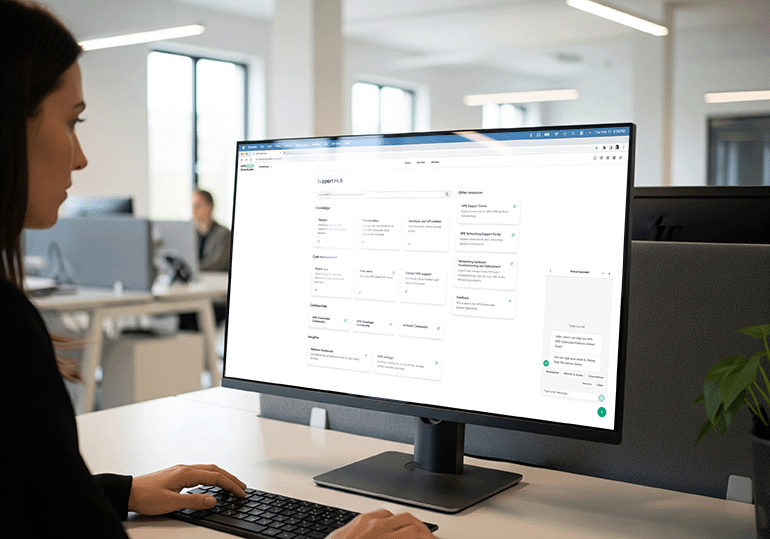

HPE GreenLake Support Vision
Unifying the platform support experience
Overview
As the Lead UX Designer & Strategist for the HPE GreenLake Support Vision, I orchestrated the long-term design roadmap, aligning cross-functional leadershipon a unified ecosystem strategy to eliminate siloed user journeys.
It was presented first in 2023 to the CTO of HPE, and then to the CEO and the full Executive Committee (EC), securing buy-in for a multi-year roadmap. It became an annual strategic ritual, with an updated Vision in 2024, renewing the commitment to a fully autonomous, AI-driven support future
✶ Aligned 3+ disparate product silos into one vision
✶ Defined a comprehensive 3-year UX roadmap
✶ Secured executive buy-in for cross-platform integration
Role
Team
Scope
Navigating multiple support silos

Fragmented ecosystems
Users had to navigate multiple platforms, logins, and mental models just to manage their enterprise infrastructure or find simple answers.

Declining CSAT
The cognitive load of navigating the complex architecture led to measurable dips in customer satisfaction.
A unified support ecosystem supported by leadership and BUs
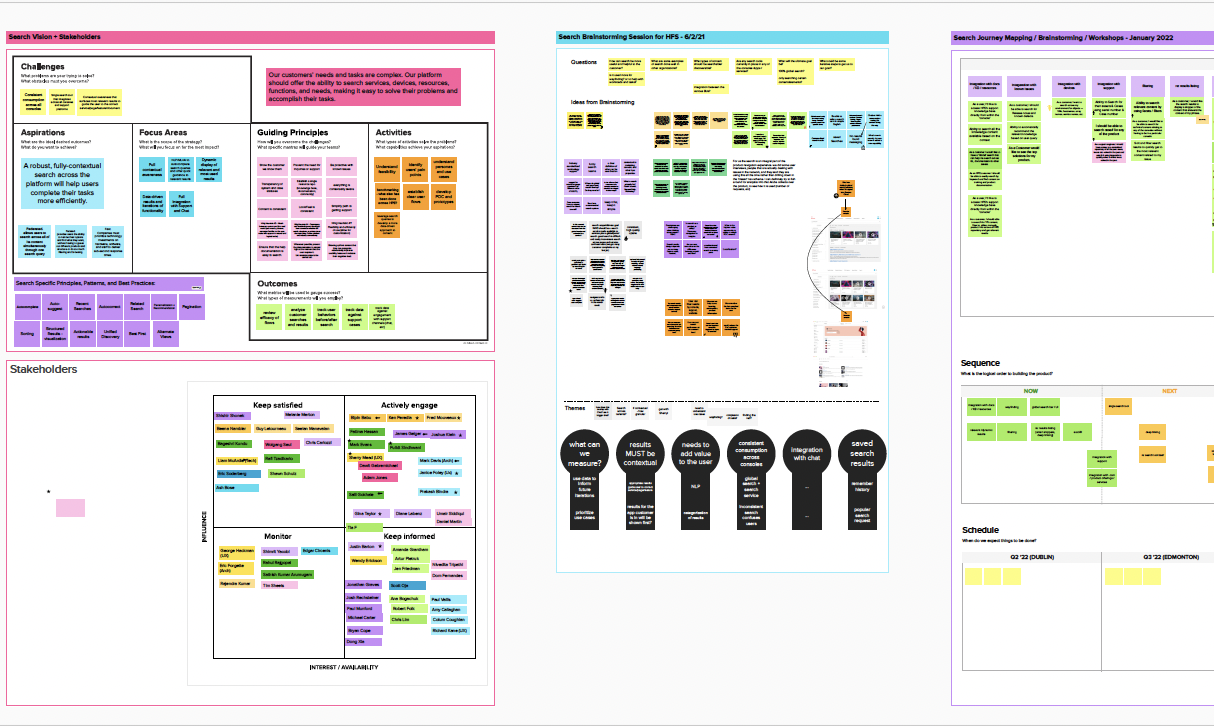
Facilitated workshops and weekly collaboration sessions across disparate BUs (with more 60 stakeholders) to align on a shared definition of help & support.
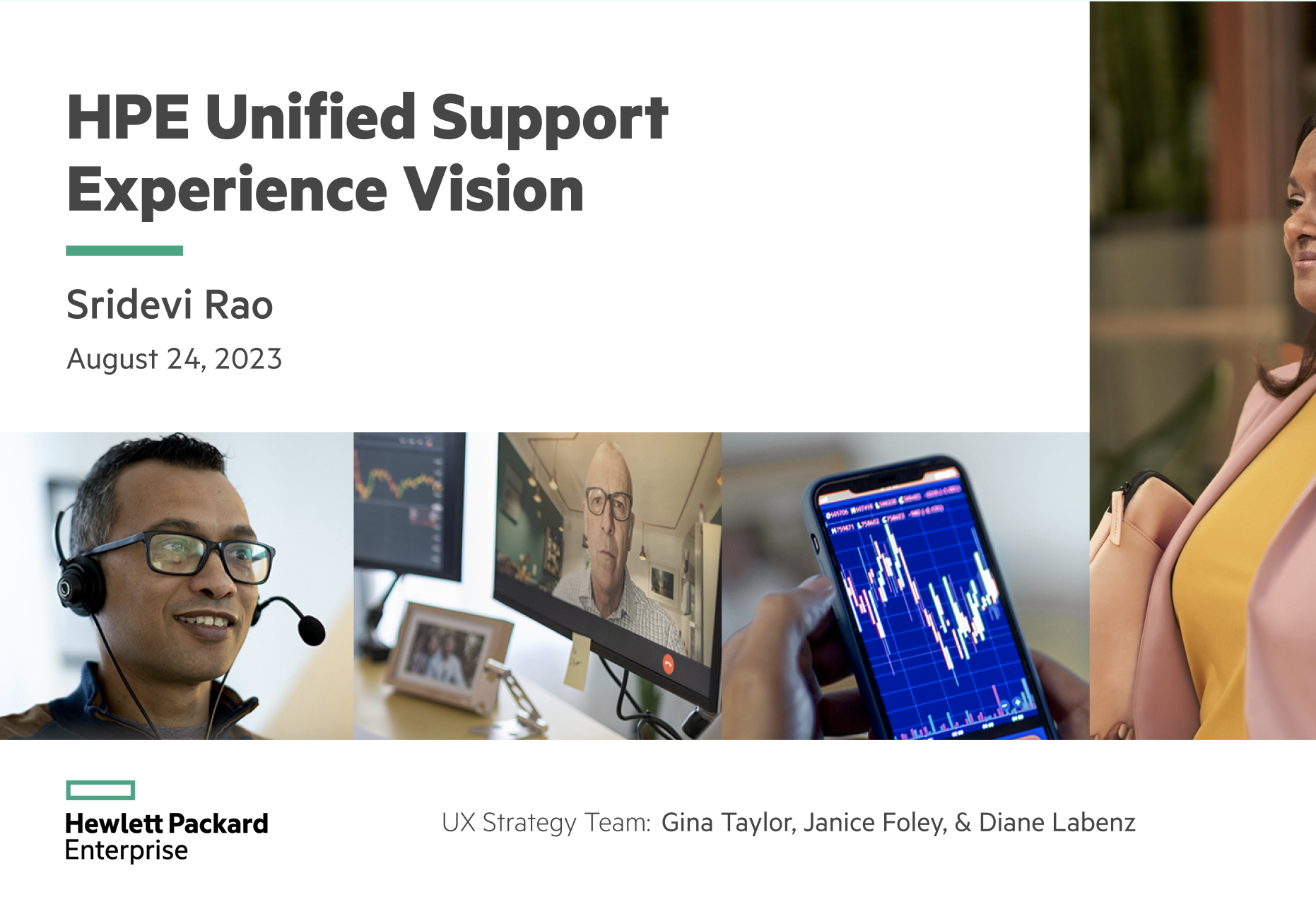
Created a video presentation with prototype for the VP of HPE Services and Executive Committee leadership, securing buy-in for a multi-year convergence strategy.
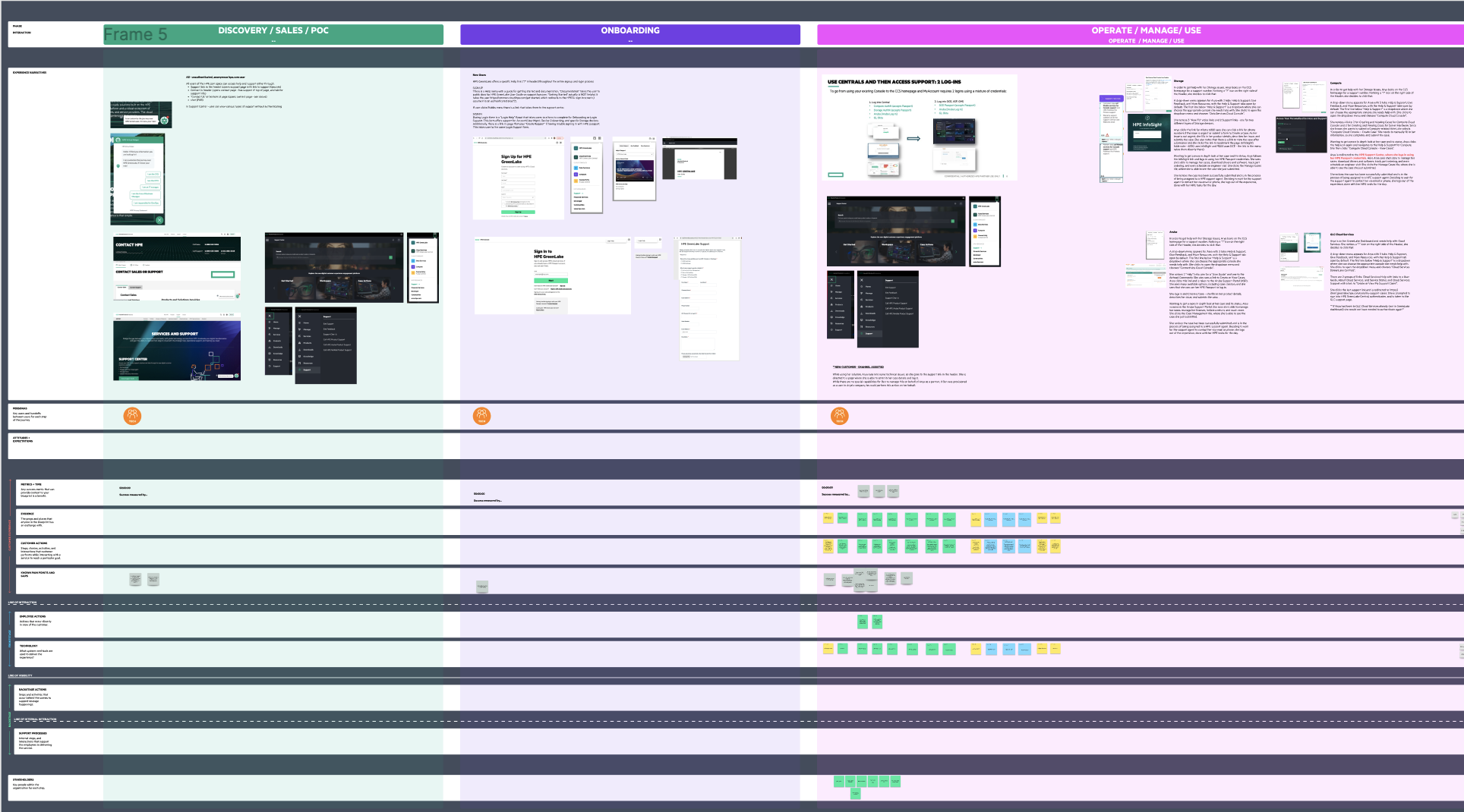
Created end-to-end service blueprints to map the convergence of legacy architecture with modern Cloud Native principles.
Crafting the North Star
Translating workshop data into a tangible vision required creating a conceptual prototype that stakeholders could actually react to and rally behind.
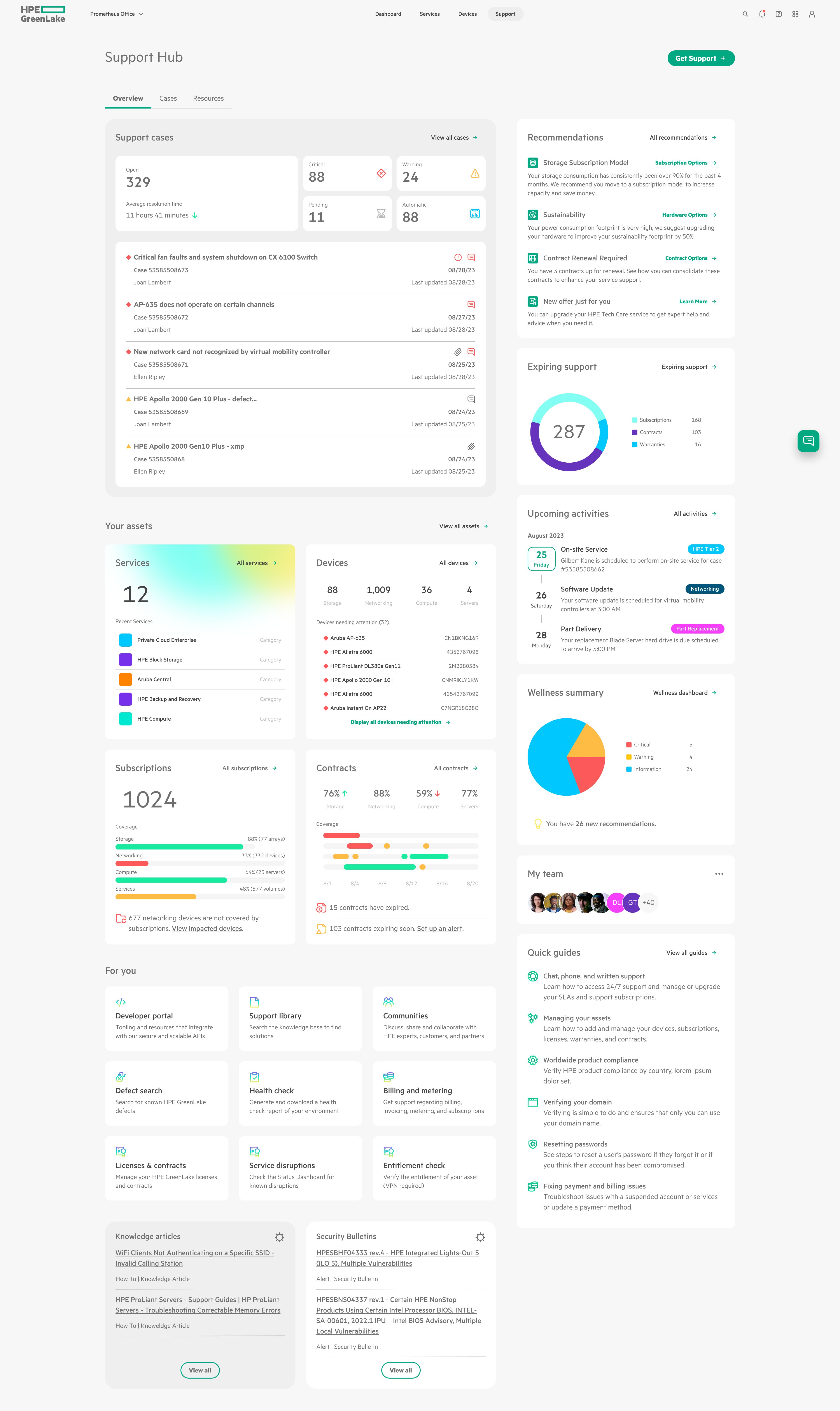
Single panel of glass: Offer customers a single, unified support experience for their entire environment
Common account model: Delivers a single HPE Customer experience throughout their journey
Personalized & customizable: Show the customer we know them and allow customization to fit their needs
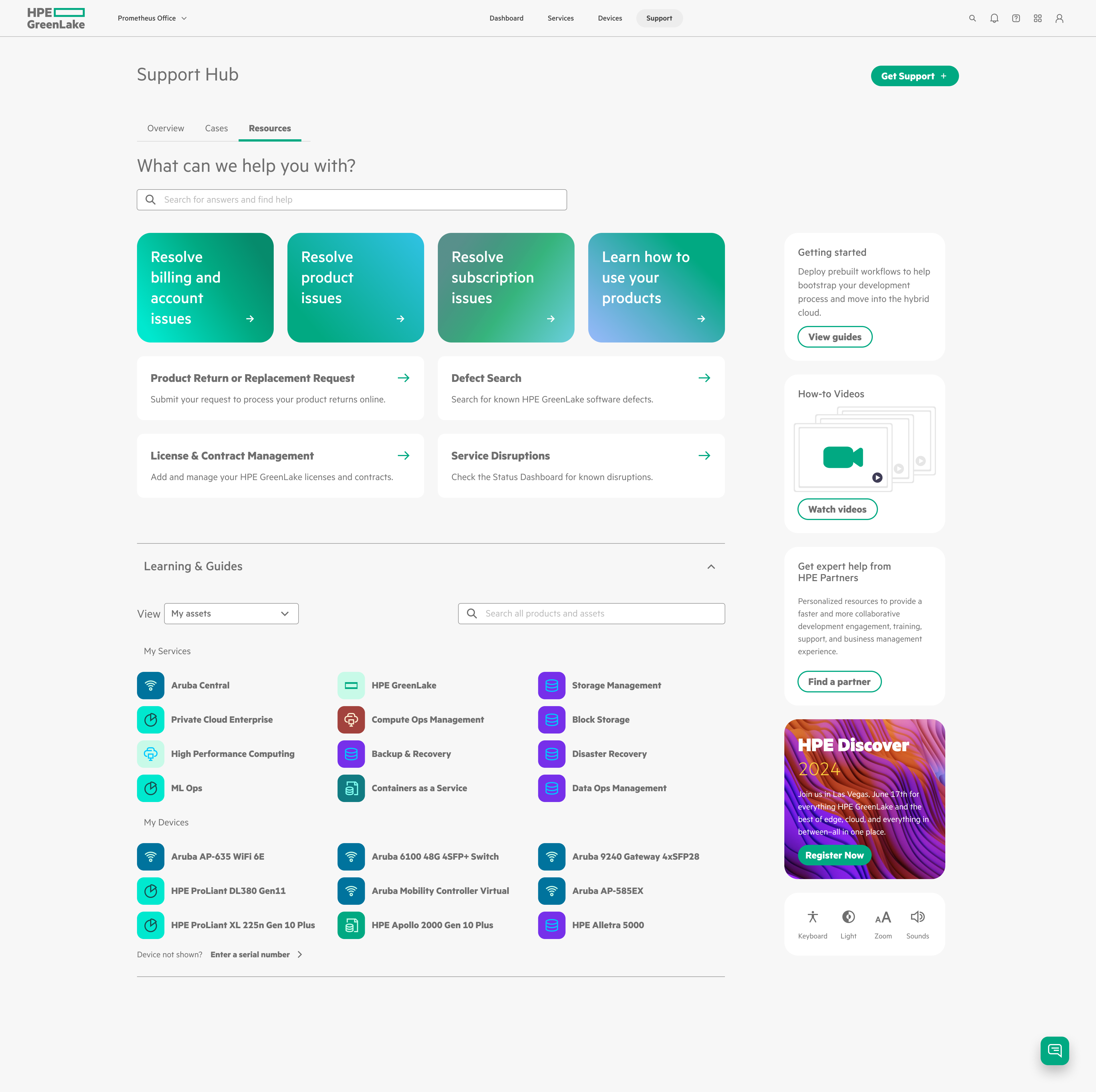
Simple paths to getting help
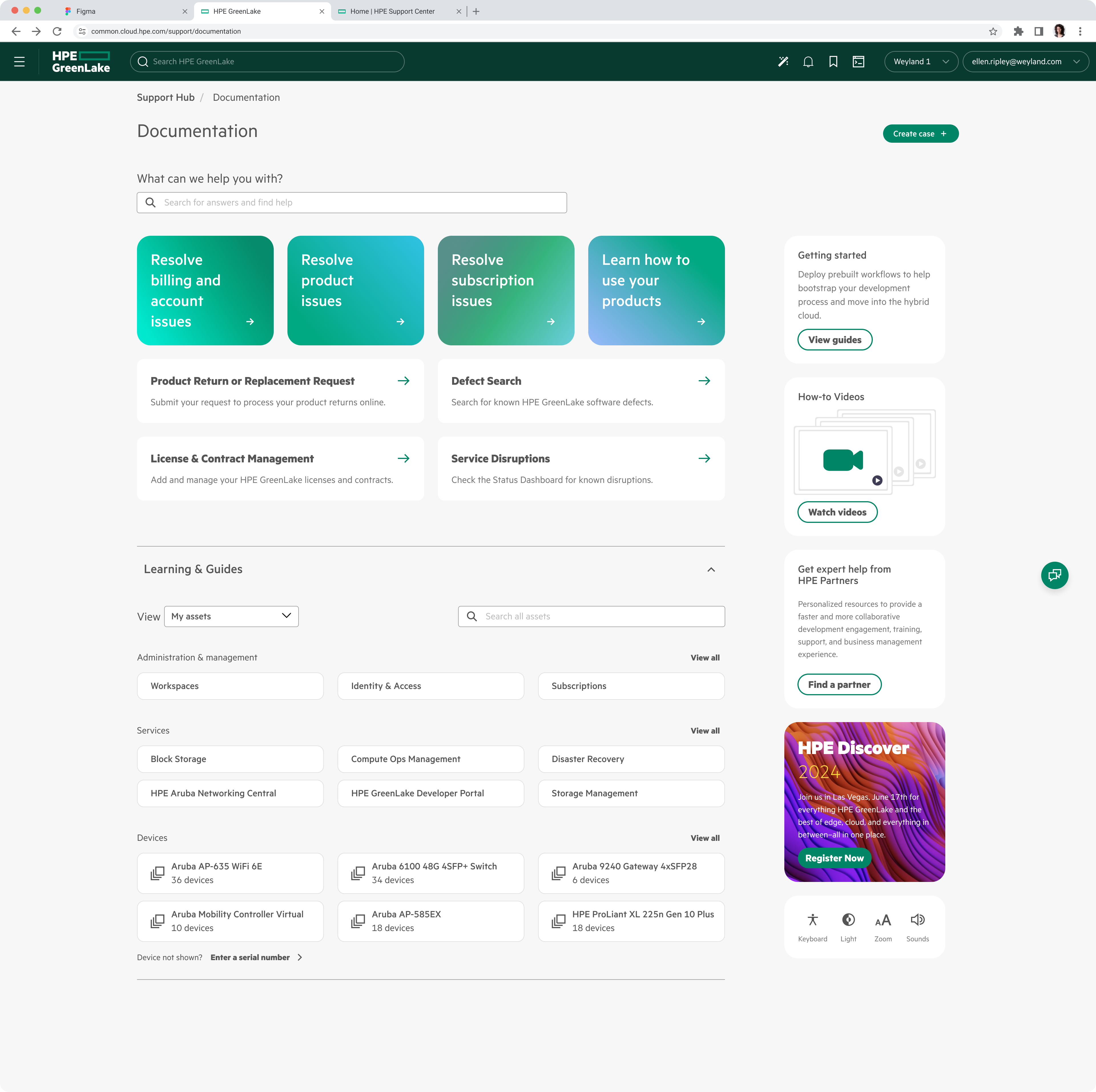
Providing quick access to help & support tools when customers need them the most by making them available to customers from anywhere within their HPE GreenLake ecosystem.
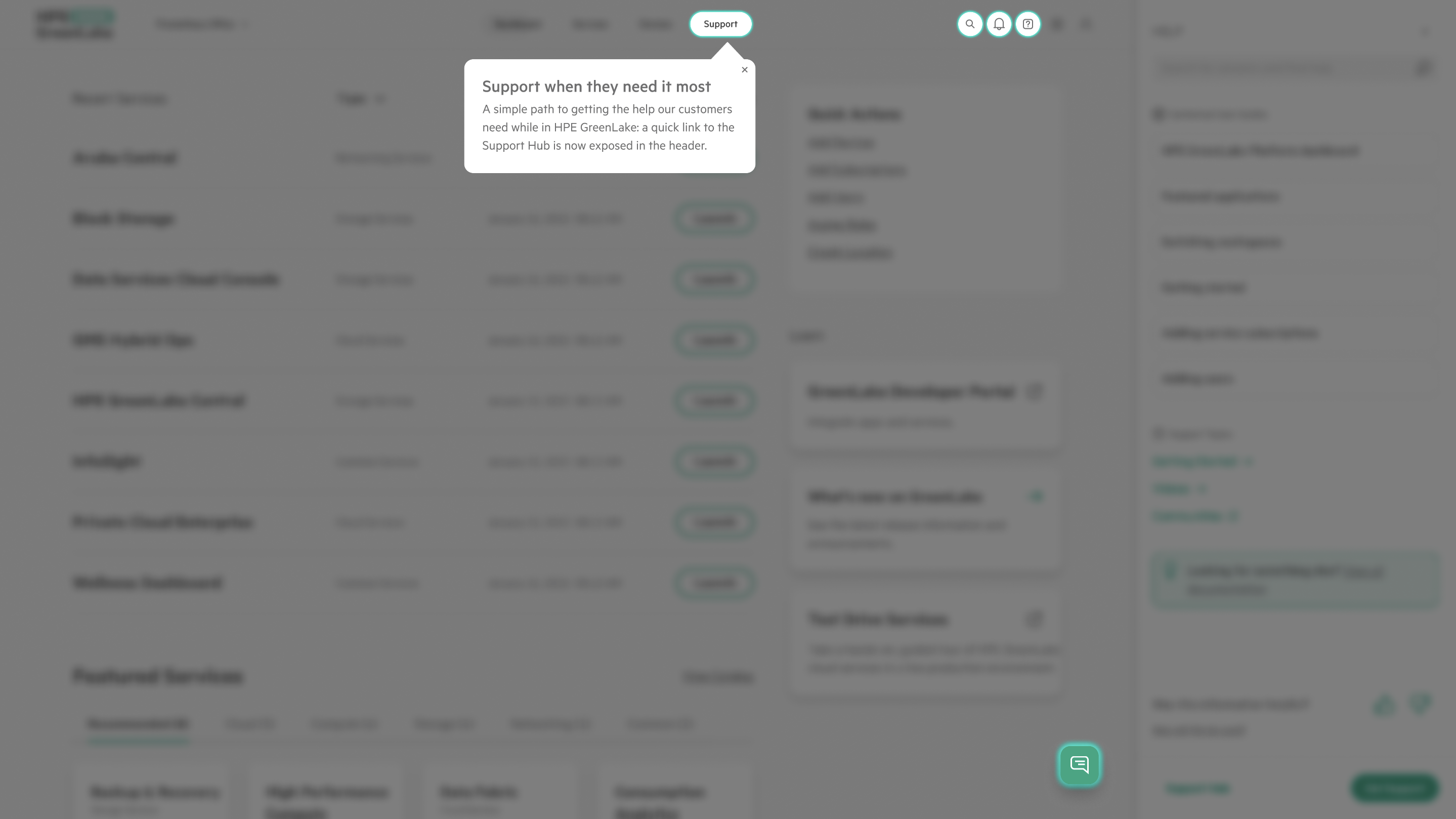
Addition of an exposed quick link in the global header for the Support Hub and all support tools and resources. (the global header can be accessed by customers no matter where they are within their HPE GreenLake ecosystem)
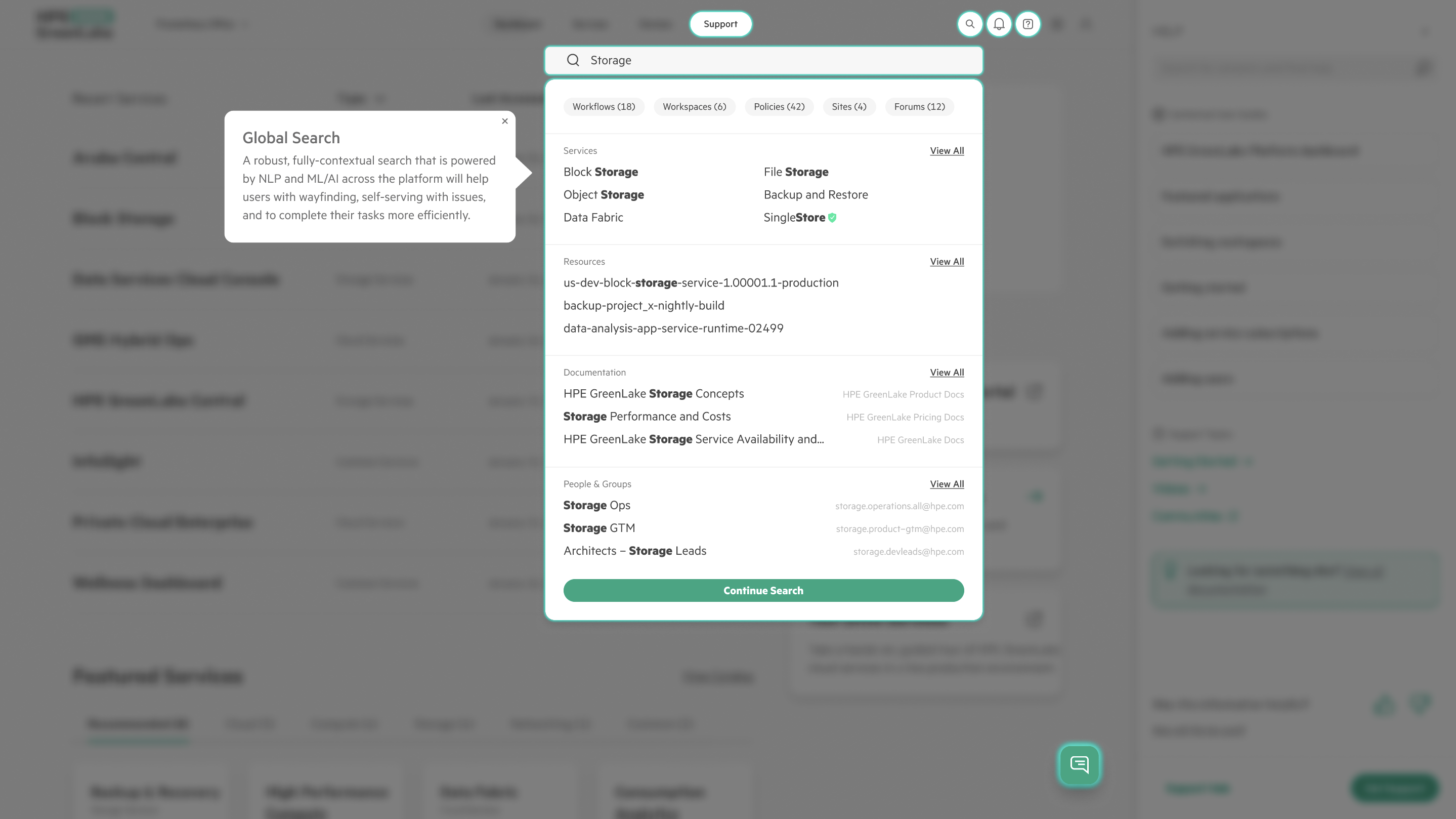
A robust, fully-contextual search that is powered by NLP and ML/AI across the platform will help users with wayfinding, self-serving with issues, and to complete their tasks more efficiently.
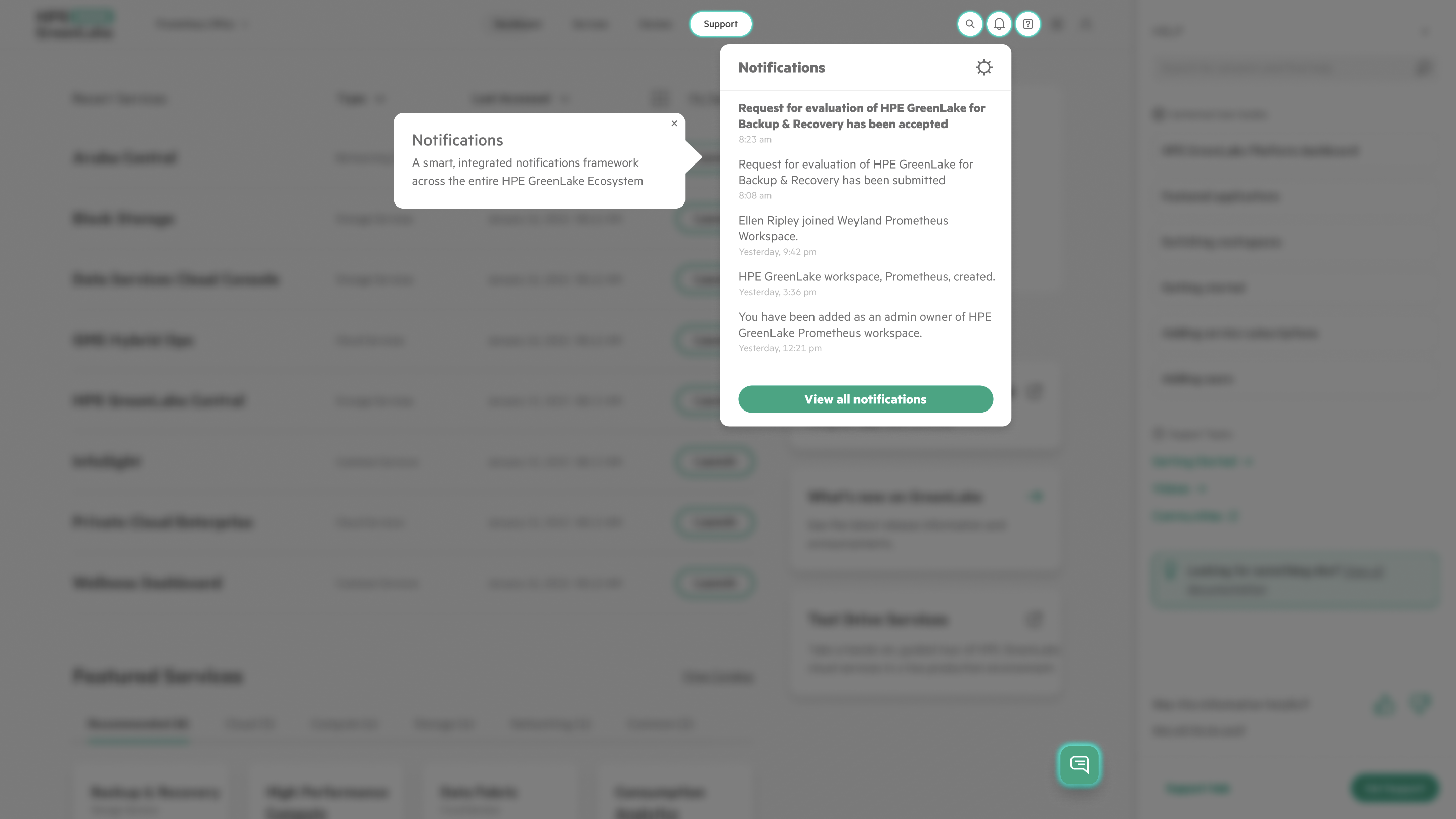
A smart, integrated notifications framework across the entire HPE GreenLake ecosystem that. isaccessible from both the global header, and via a designated notifications center. (+ additional frameworks for allowing BUs to send notifications)
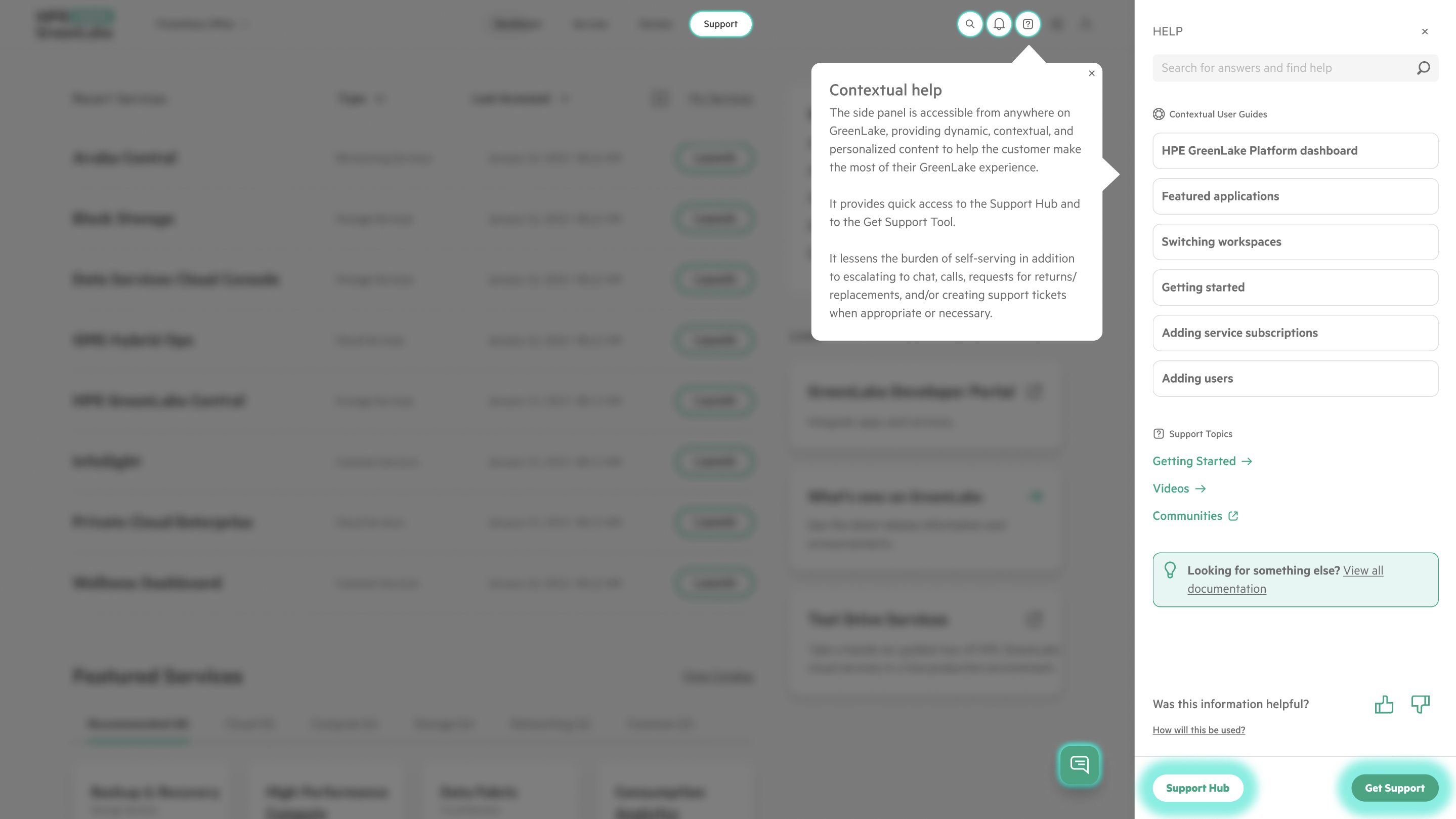
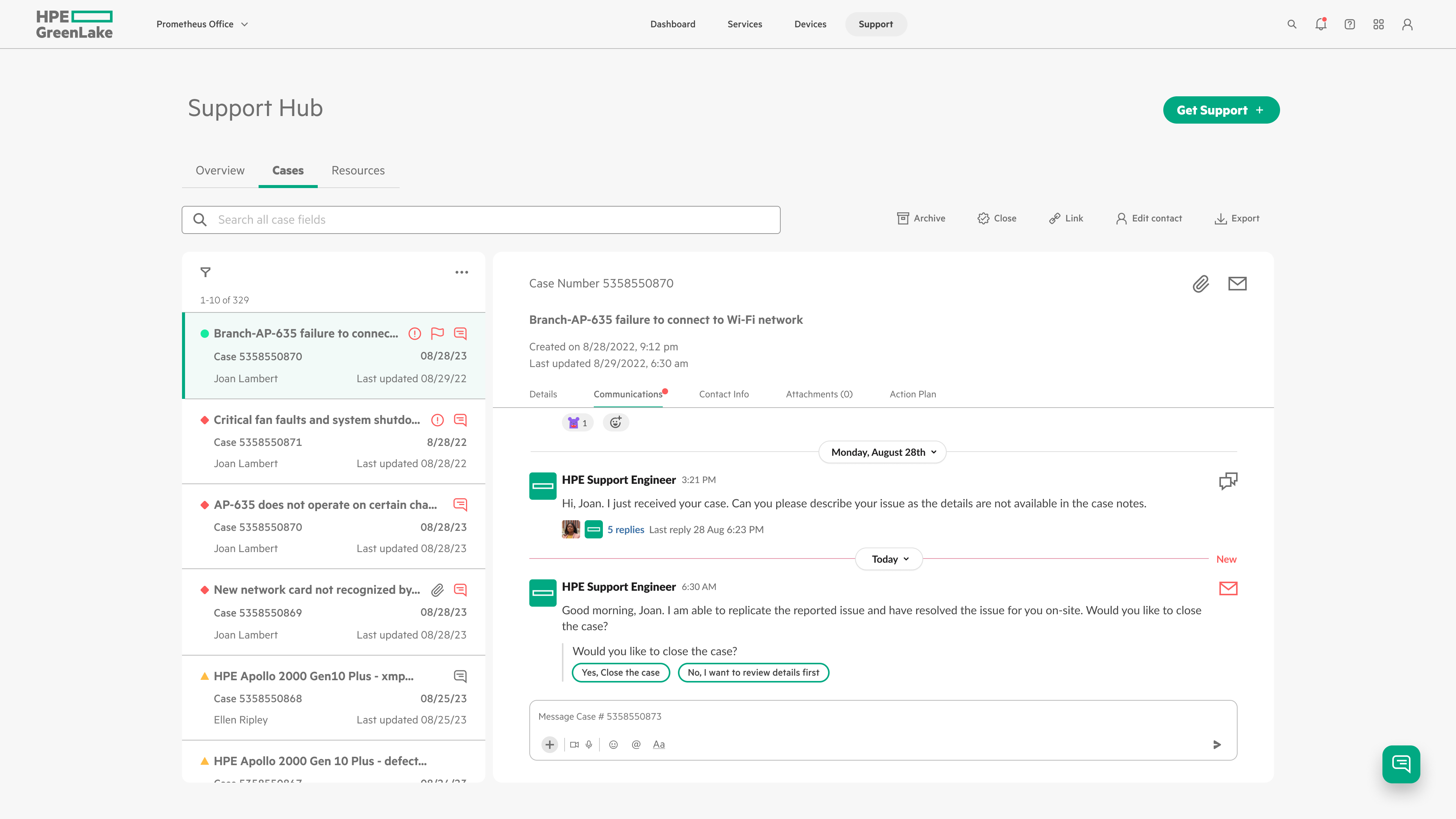
Combined Help & Support menu with and contextual help. Accessible from anywhere on HPE GreenLake, providing dynamic, contextual, and personalized content to help the customer make the most of their HPE GreenLake experience. It provides quick access to the Support Hub and to the Get Support tool. It lessens the burden of self-serving in addition to escalating to chat, calls, requests for returns/replacements (online RMA), and/or creating support tickets when appropriate or necessary.
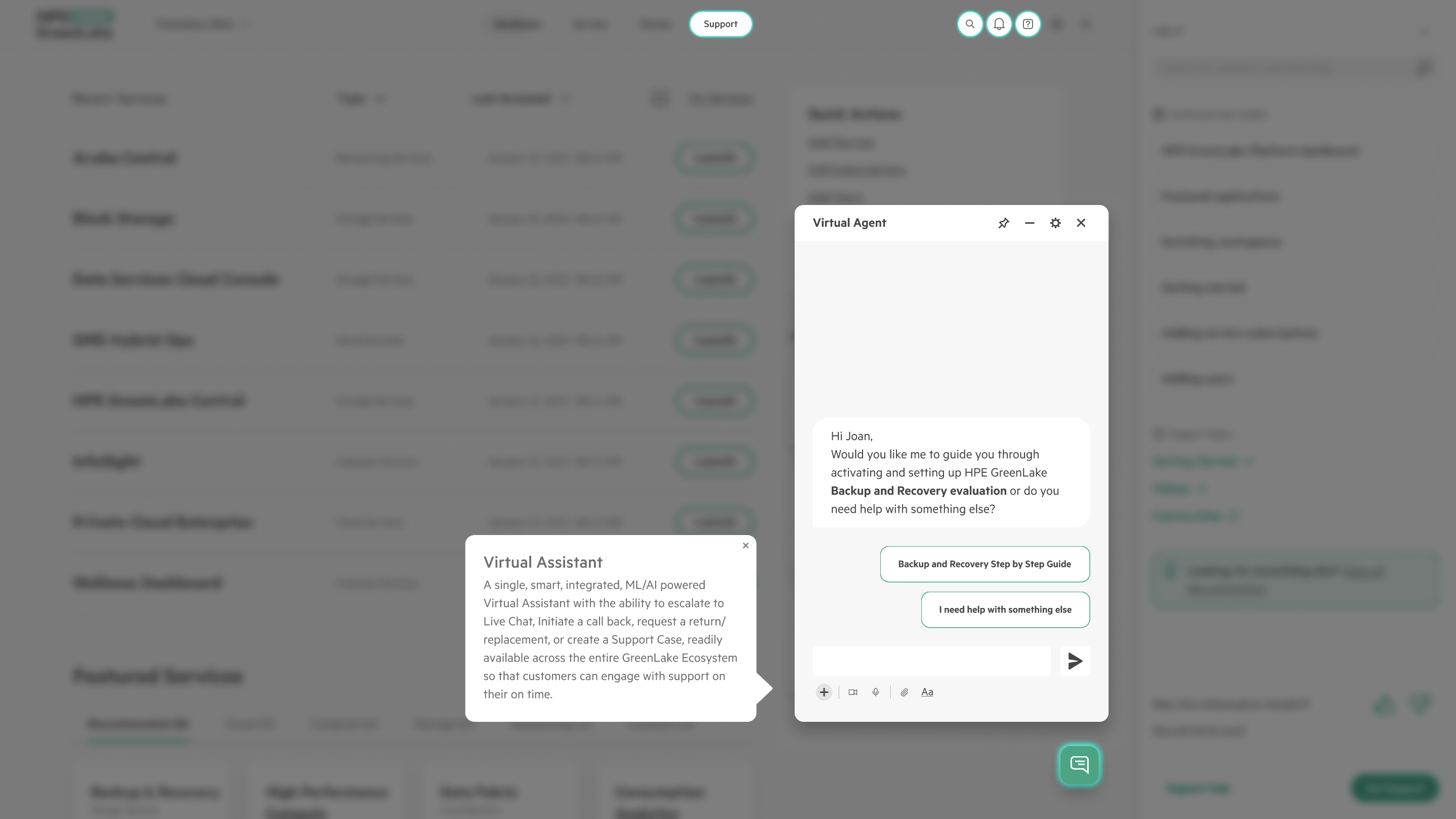
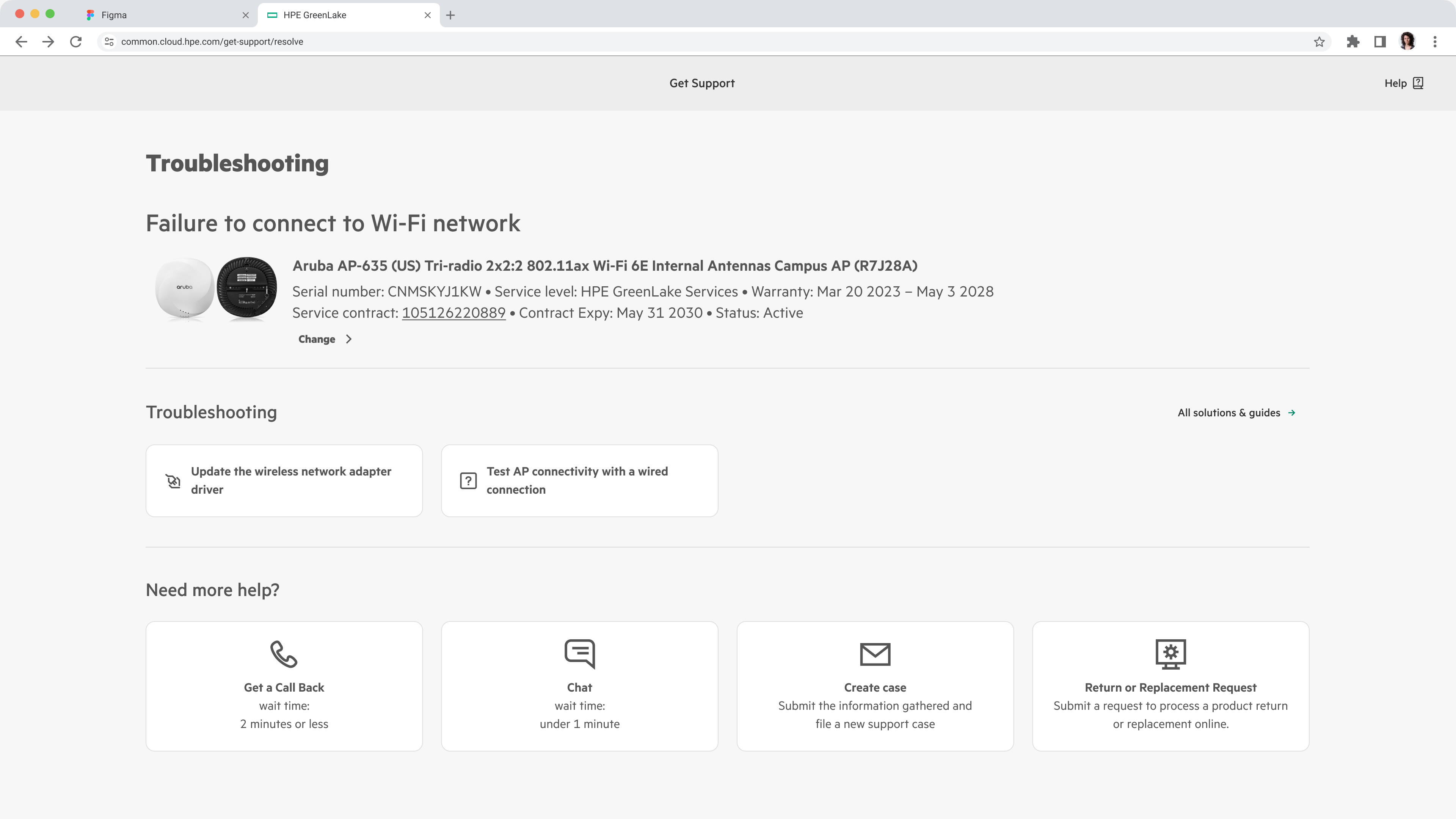
A single, smart, integrated, ML/AI powered Virtual Assistant with the ability to escalate to Live Chat, Initiate a call back, request a return/ replacement, or create a Support Case, readily available across the entire GreenLake Ecosystem so that customers can engage with support on their on time.


Siloed teams, tools, & data

Siloed organizations
HPE GreenLake and HPE Services essentially operated as separate companies. I acted as the diplomat, using design artifacts (wireframes, journeys, and prototypes) as the universal language to bridge the gaps.

Technical constraints
Legacy backends with siloed data made true integration difficult. My strategy focused on the single pane of glass layer first, creating a unified frontend while the backend caught up.
Adapting to engineering realities
By 2024, it became evident that executing the original vision of a completely unified backend "common account model" exceeded current engineering capacity and would severely delay time-to-market.
I shifted our UX approach to embrace a Micro Frontend (MFE) and hybrid integration model. The goal was to maintain the seamless illusion of a singular experience for the user, while drastically reducing the backend data-consolidation burden on our engineering teams.
Designing the illusion of a single pane of glass
To execute this pivot, we defined three distinct UI integration patterns in addition to features that would be available natively, allowing us to deliver immediate value without waiting years for backend alignment: Micro Frontends (MFE), native "lite" launchpads, and contextual handoffs.
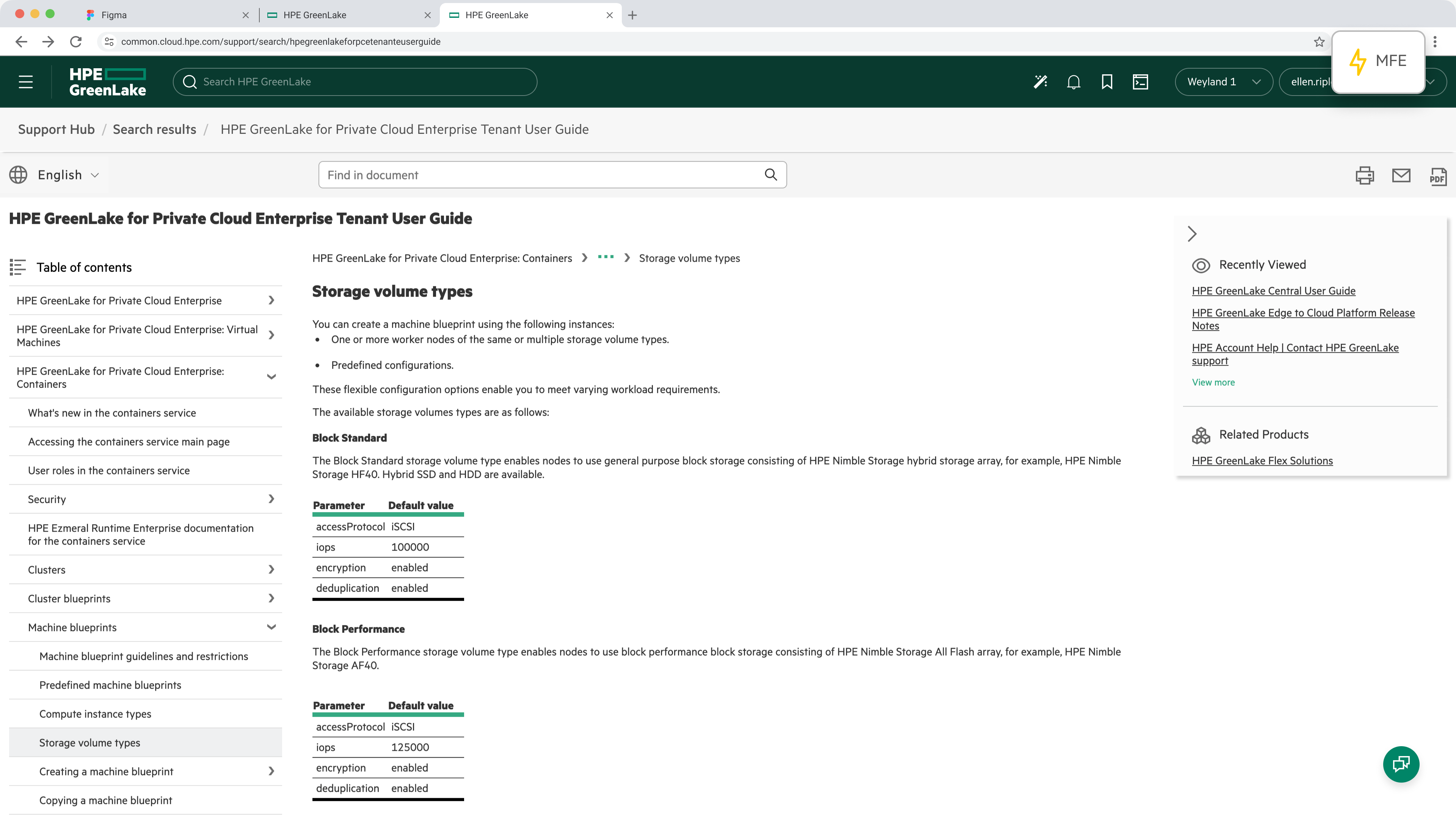
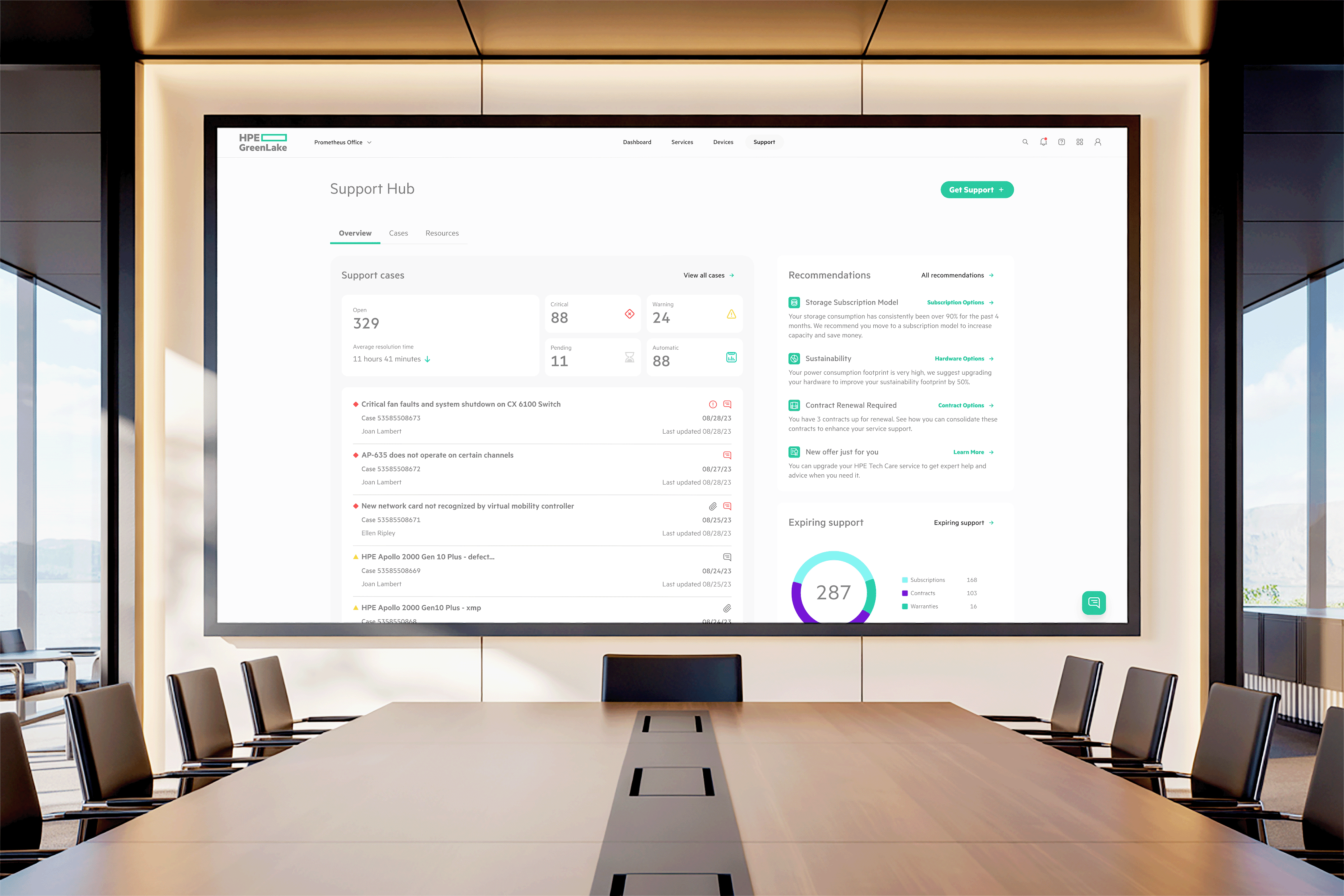
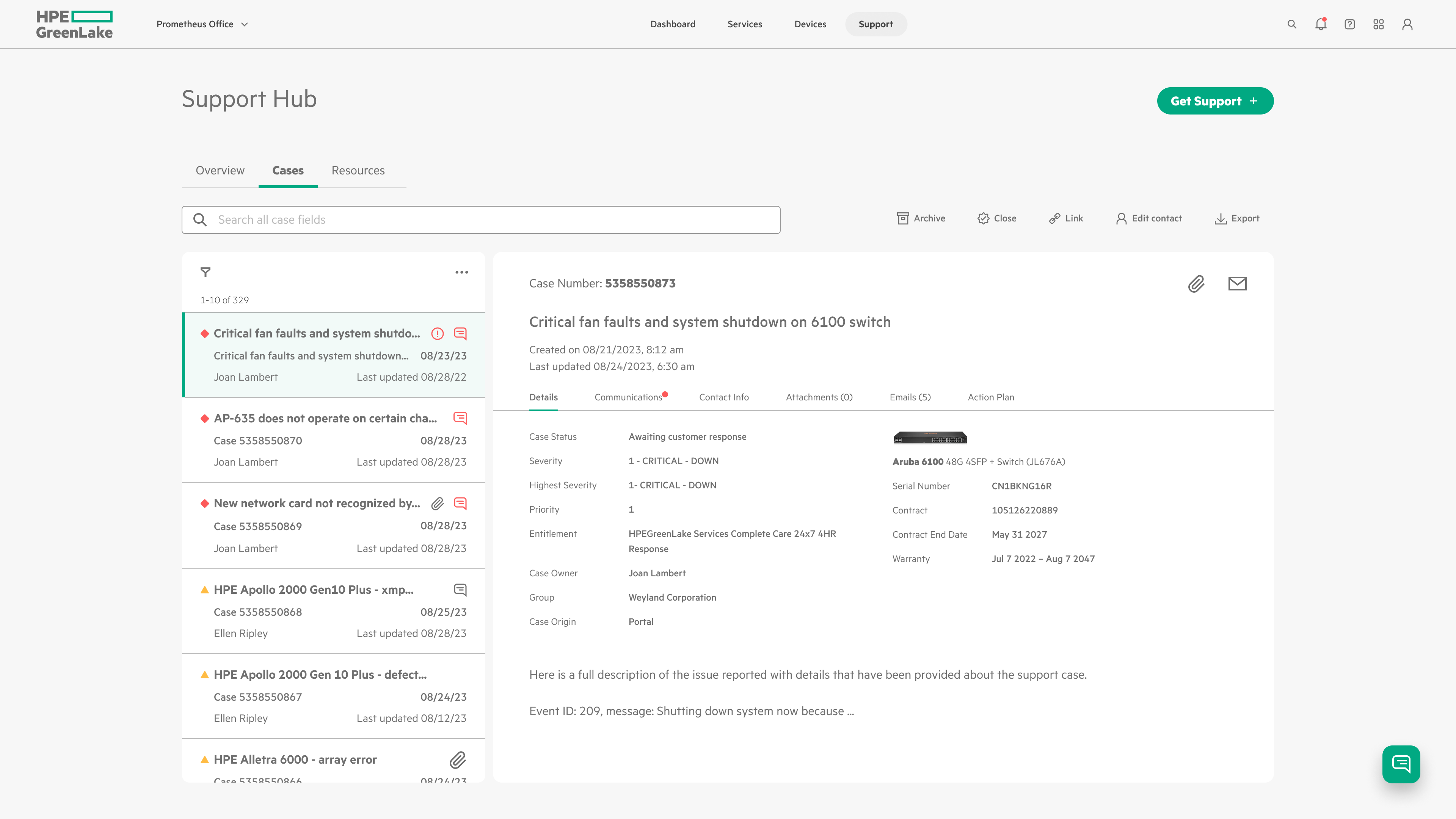
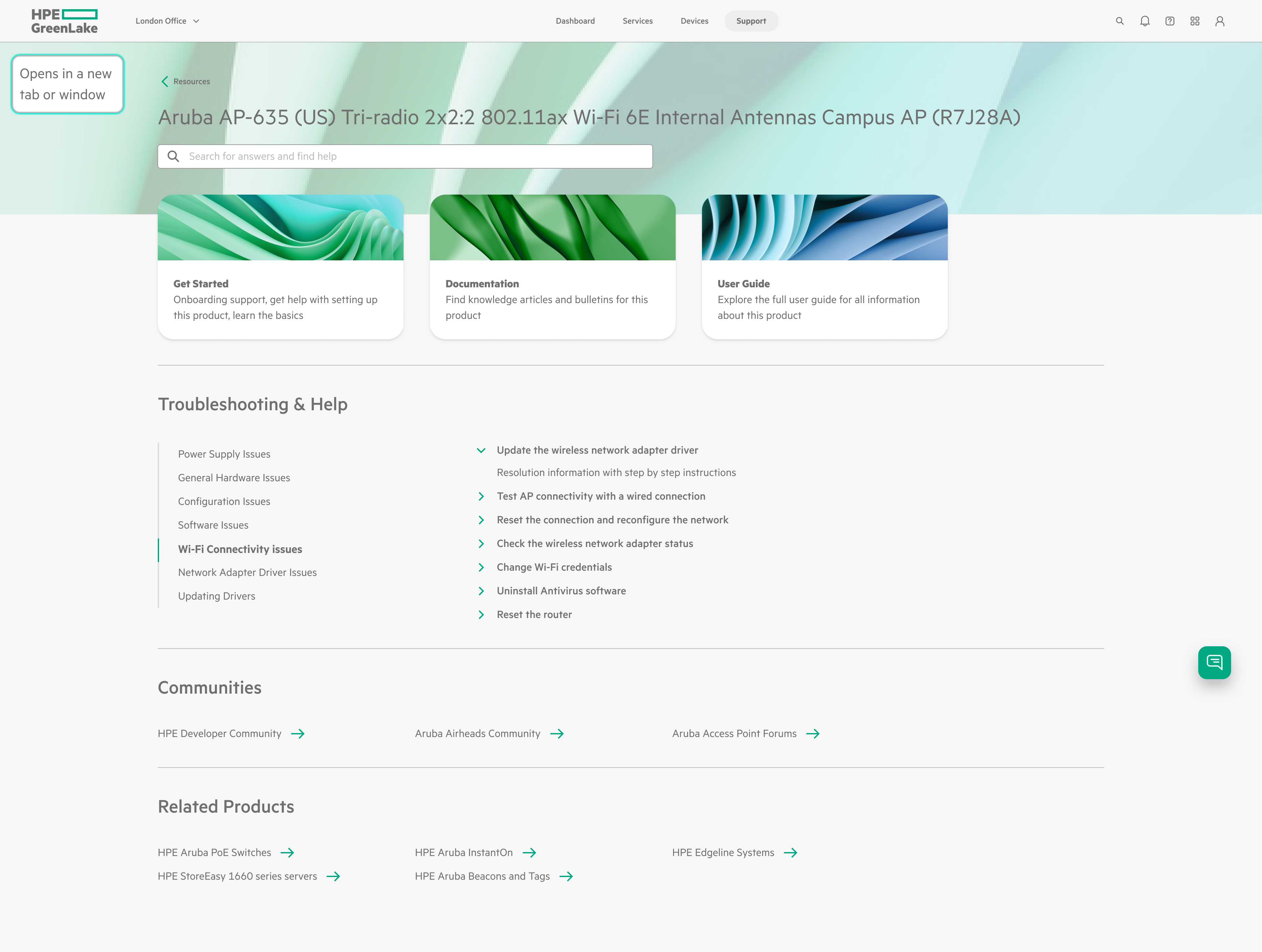
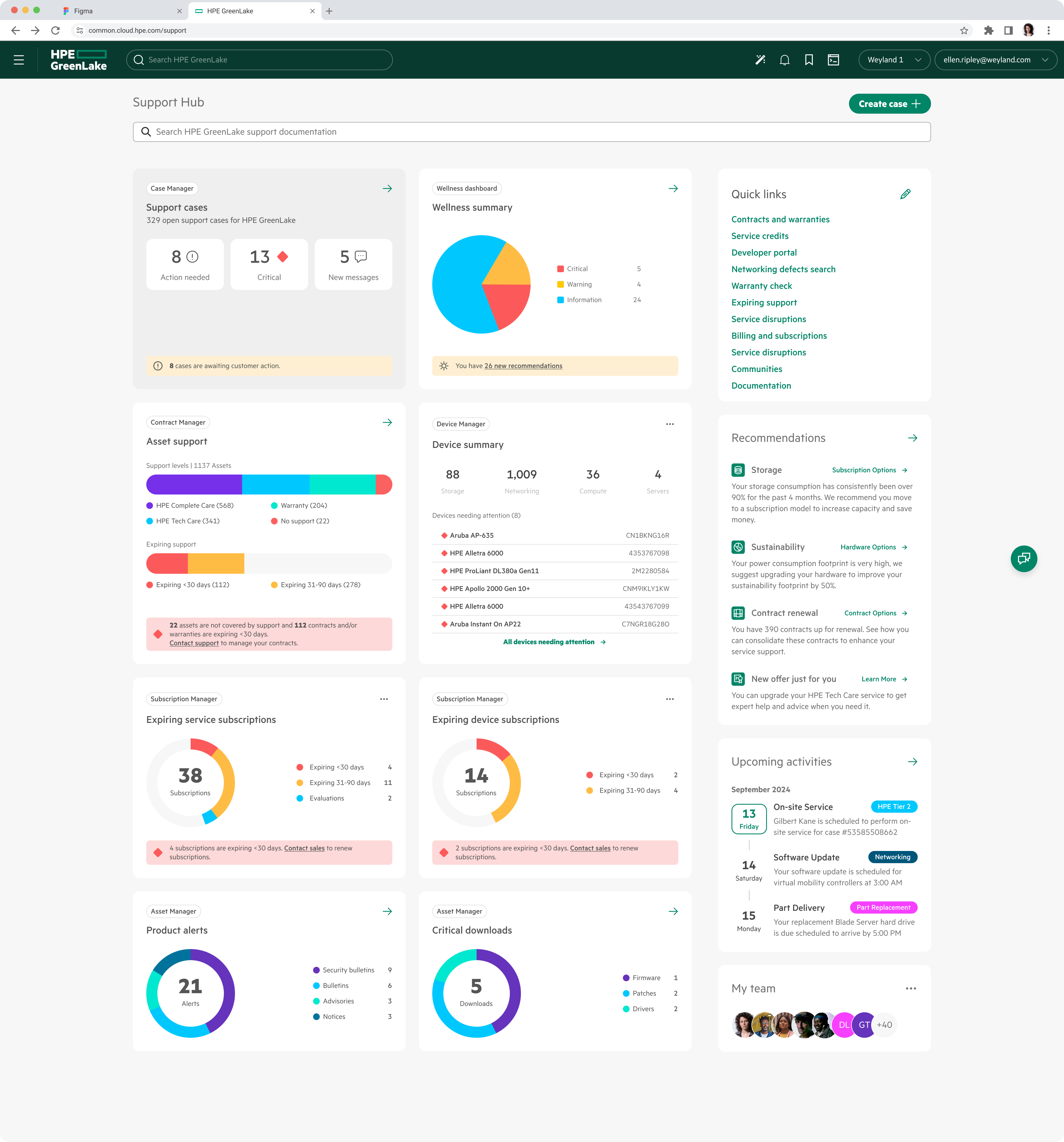
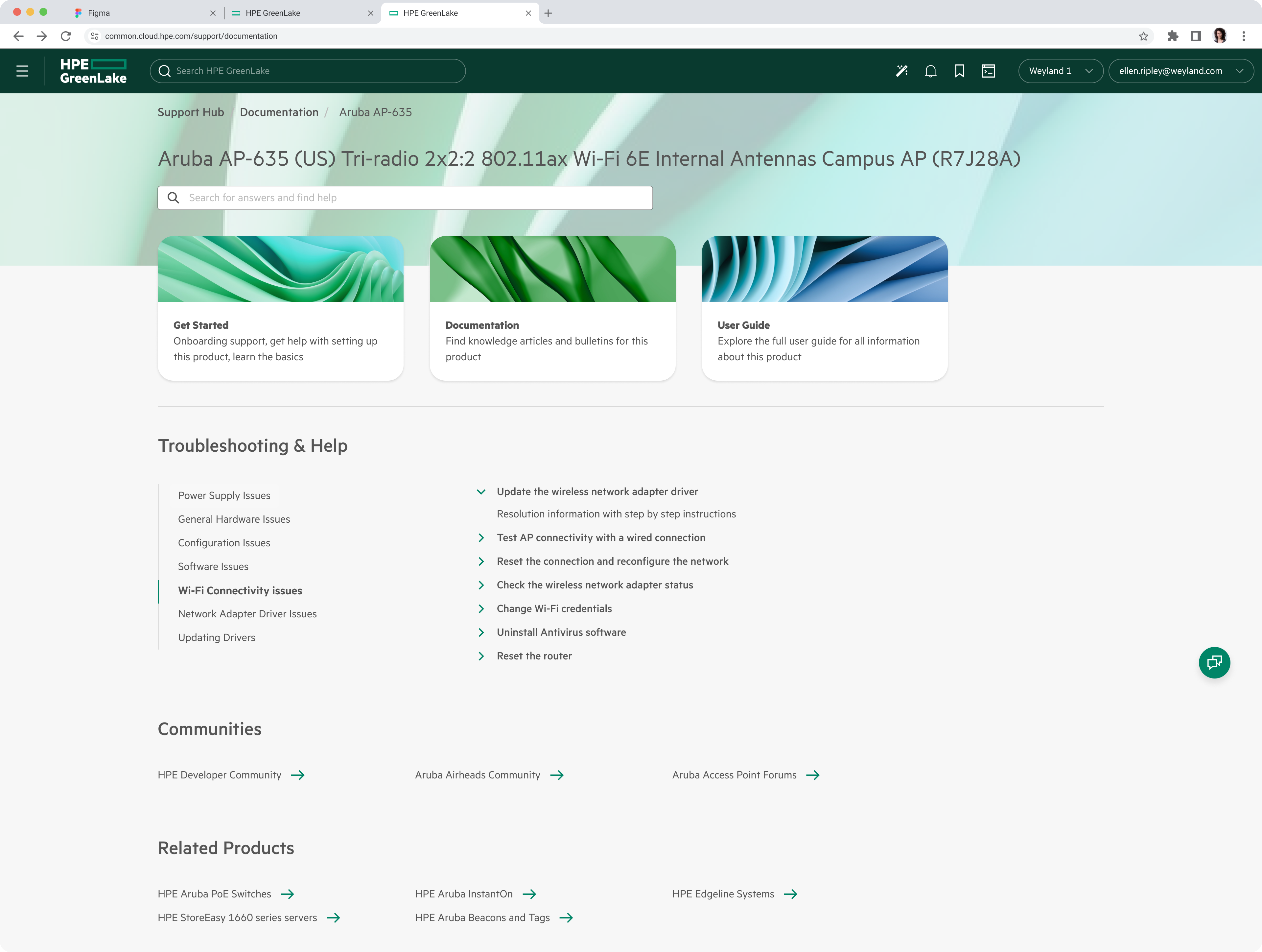
For complex workflows like Support Search, we utilized MFE. The user initiates a search and retrieves a list of results in the HPE GreenLake Support Hub, but clicking into a result will render the legacy HPE Support Center topic directly within the HPE GreenLake UI "skeleton" and header (shown in image). To the user, they never left the platform.
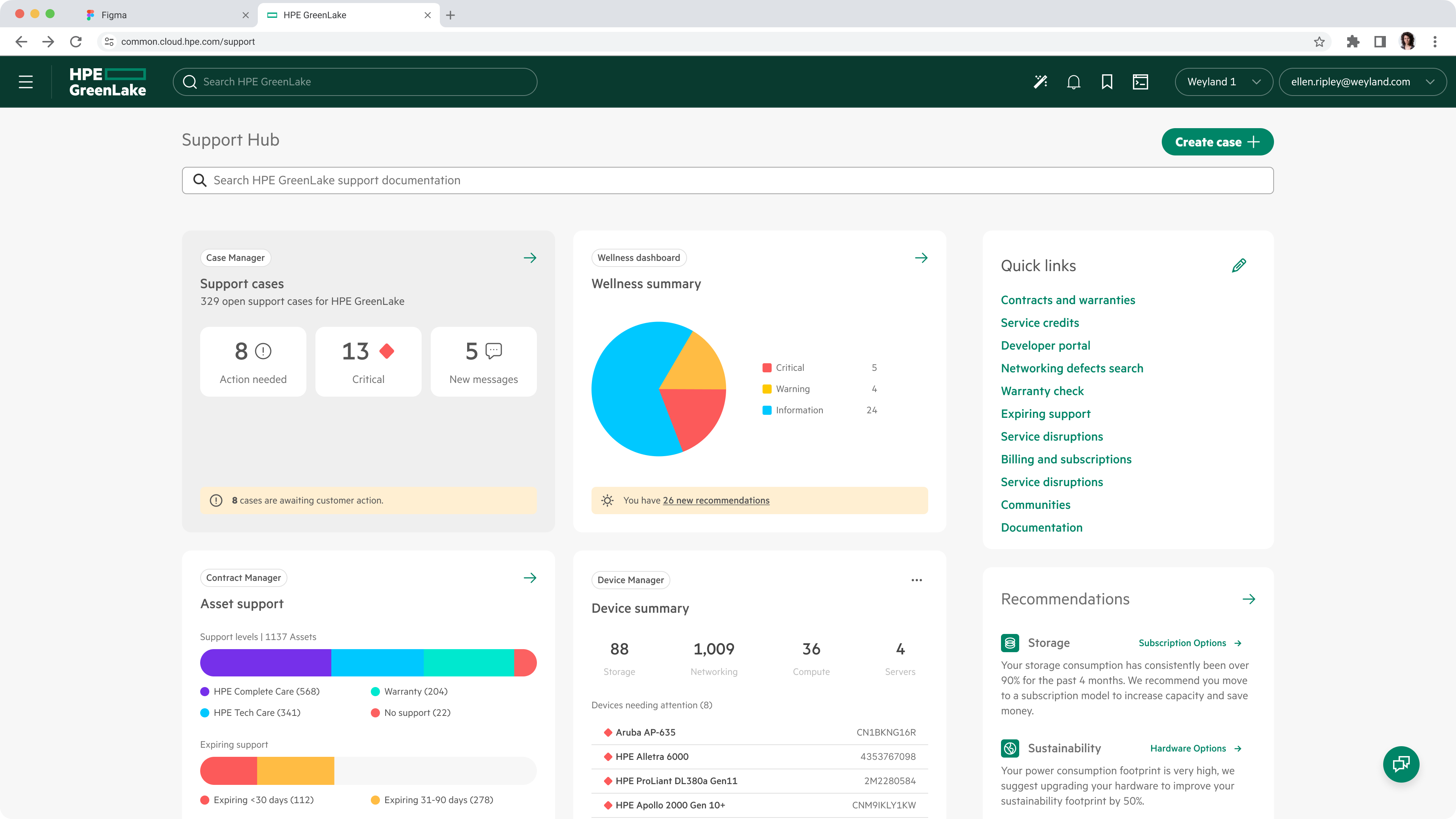
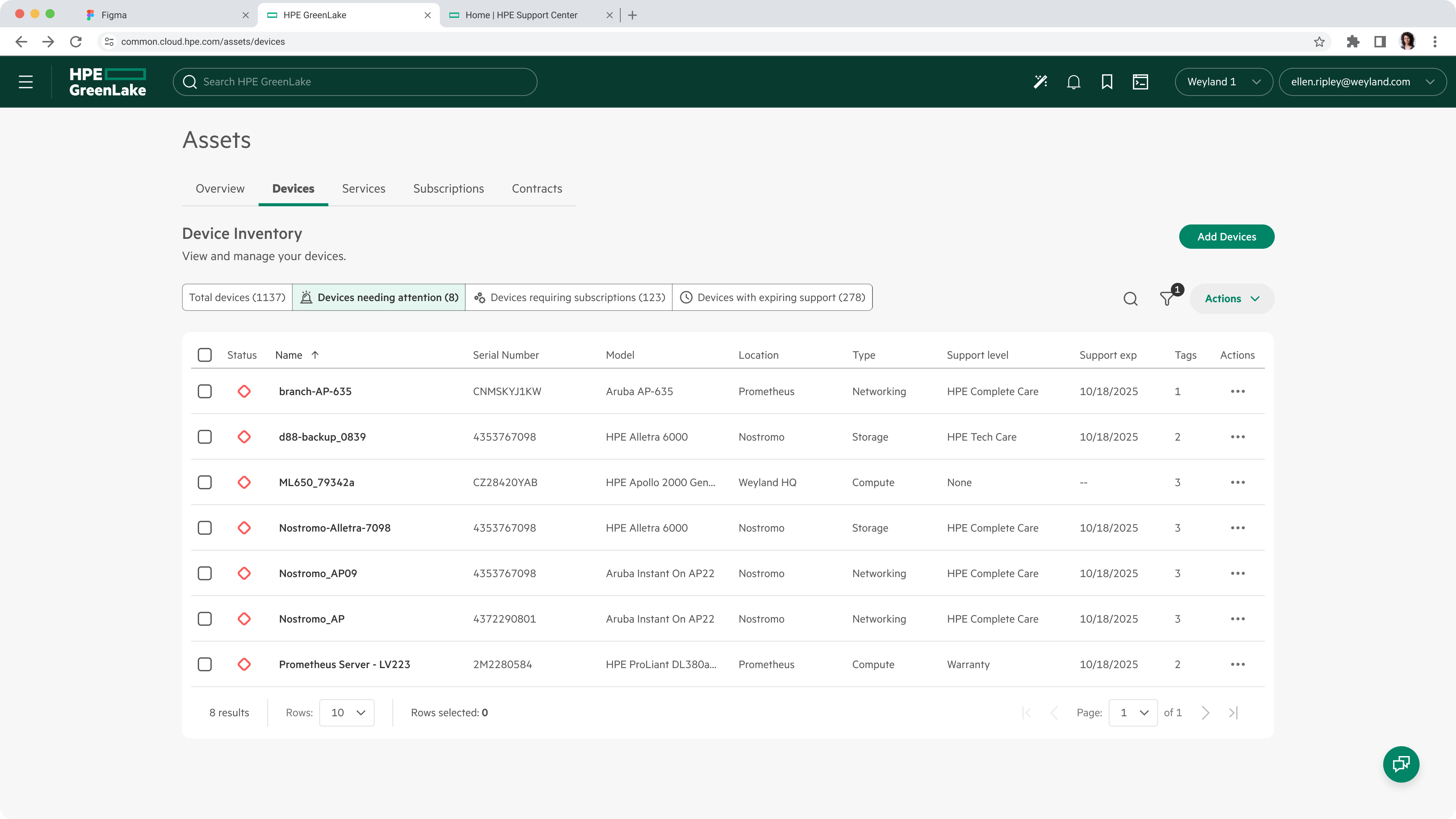
For features like Case Management and Service Contracts, we used low-complexity APIs to feed high-level telemetry (e.g., "329 open support cases") into native dashboard cards. Clicking the card would trigger a contextual handoff.
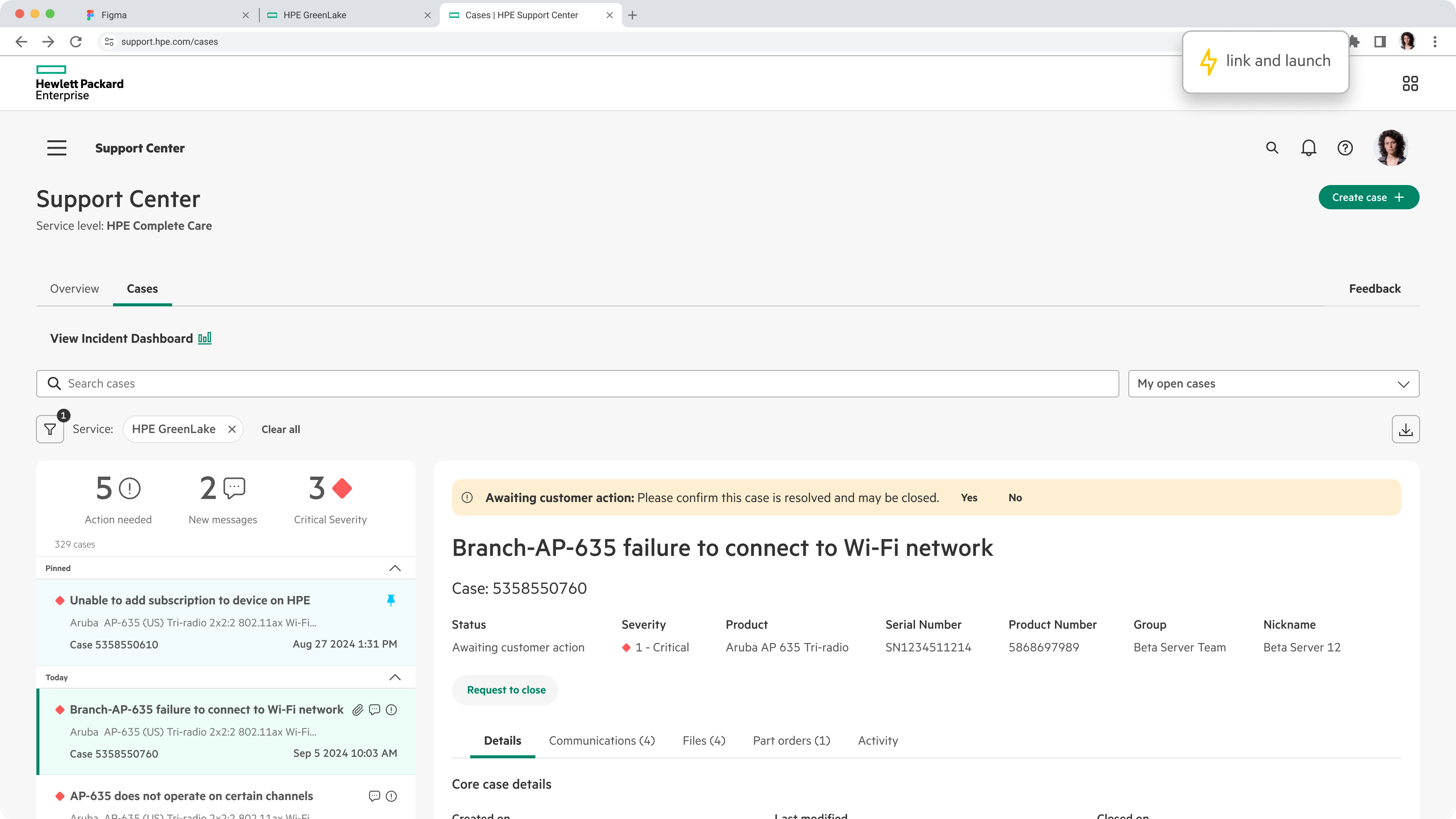
When a user clicked a "Lite" dashboard card for deeper management, the system seamlessly launches the full legacy HPE Support Center in a new tab, acting as a highly contextual, smart routing system rather than forcing a heavy native rebuild.
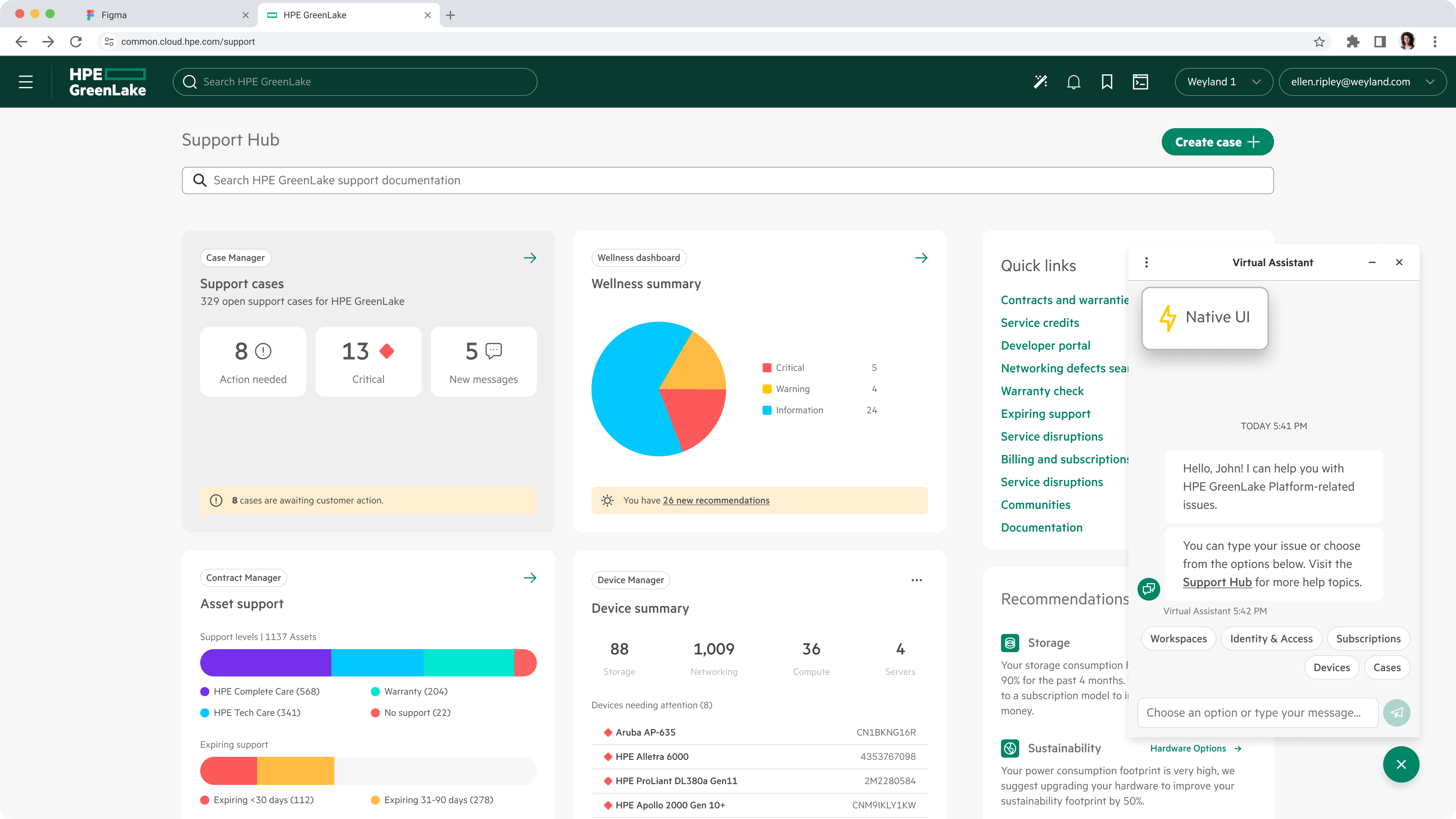
For high-stakes workflows like the Virtual Assistant, a hybrid approach wouldn't suffice. We prioritized our engineering capacity to build these critical touchpoints fully natively within the GreenLake ecosystem, leveraging deep, contextual user data to deliver a frictionless, zero-to-one experience exactly where it matters most.


Designing the proactive support ecosystem
While engineering constraints necessitated a focused MVP runway, a true North Star vision requires planning for long-term scalability. The concepts below represent the advanced, AI-driven architectural blueprints I designed to shift enterprise support from reactive firefighting to a proactive, tailored, and fully unified experience.
Reduced friction and a plan set in motion

Unified architecture
Successfully launched the Support Hub, Support Search, and Contextual Help side panel.

Operational efficiency
The unified support strategy is projected to reduce case volume by shifting users to self-service.

Culture shift
Established design strategy as a prerequisite for annual planning, not just an afterthought.