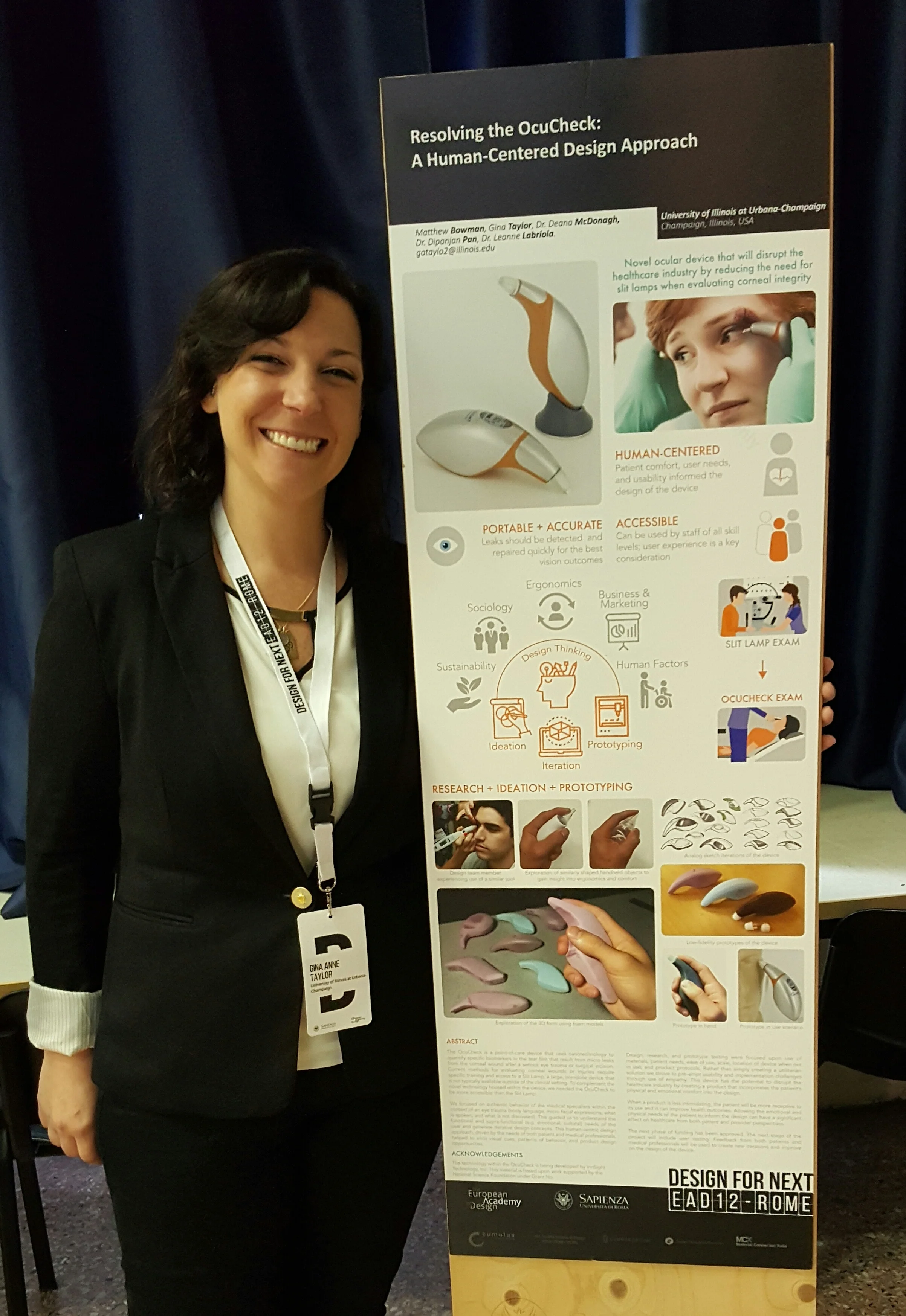
In April 2017, I was invited to present my paper, "Improving the Pelvic Exam Experience: A Human-Centered Design Study," at the 12th European Academy of Design International Conference in Rome, Italy: Design for Next. I also presented for a poster a collaborative project: "Resolving the OcuCheck: A Human-Centered Design Approach."
Link to Conference Proceedings
conference paper Abstract
Many women are traumatized by pelvic examinations, causing them to experience increased anxiety or avoid these exams completely. Use of a vaginal speculum is necessary during the majority of pelvic examinations. The traditional speculum design is uncomfortable for most patients and lacks considerations for the health care provider. Incorporating Human-Centered Design methodology into the resolution of this problem allows for the consideration of the patient and doctor experiences when making design decisions. Interviews and observation can provide valuable insight for improvements to the design and user experience. Through empathic design, it is possible to develop an instrument that is functional and ergonomic for the health care provider while also promoting the physical and emotional comfort of the patient being examined. This paper challenges current medical standards and provides a novel approach to pelvic examination using a new vaginal speculum.

pelvic exams
Anxiety, pain, and discomfort have often been cited as the three main reasons for patient avoidance of the pelvic examination. Some women describe their pelvic exam experience as traumatic and extremely painful. When the exam is performed without care or concern for the patient’s fears or sensitivities, it can produce traumatic experiences.
the speculum
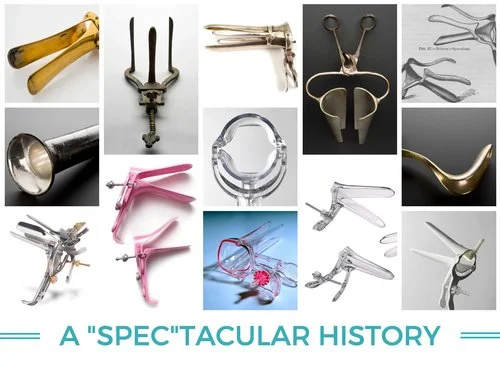
The speculum has been seen throughout history, with some designs dating back to ancient Pompeii. During the 1800s, more than 200 specula variations were created (Eveleth, 2014). In the 1840s Dr. J. Marion Sims developed the first prototype of the modern vaginal speculum, which required the patient to lie on her side with the speculum placed from behind and required the support of a medical assistant.
empathic design
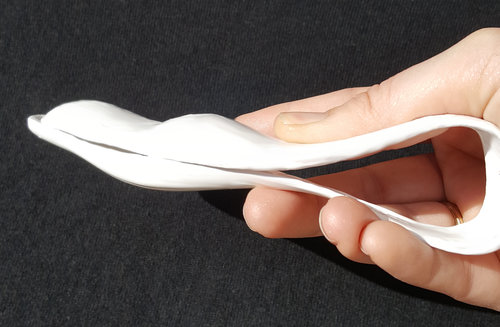
Many medical devices are purely functional and have been designed without the consideration of the emotional and physical comfort of the patient. Designers have a unique opportunity to disrupt the healthcare industry by innovating with an empathic, human-centric approach. By allowing the patient’s emotional response to inform the design, designers can create medical devices that are less intimidating to the patient.